“No matter what, nobody can take away the dances you’ve already had.” – Gabriel Garcia Marquez
&
http://aeon.co/magazine/nature-and-cosmos/how-moon-phases-affect-life-on-earth/
;
“No matter what, nobody can take away the dances you’ve already had.” – Gabriel Garcia Marquez
&
http://aeon.co/magazine/nature-and-cosmos/how-moon-phases-affect-life-on-earth/
;
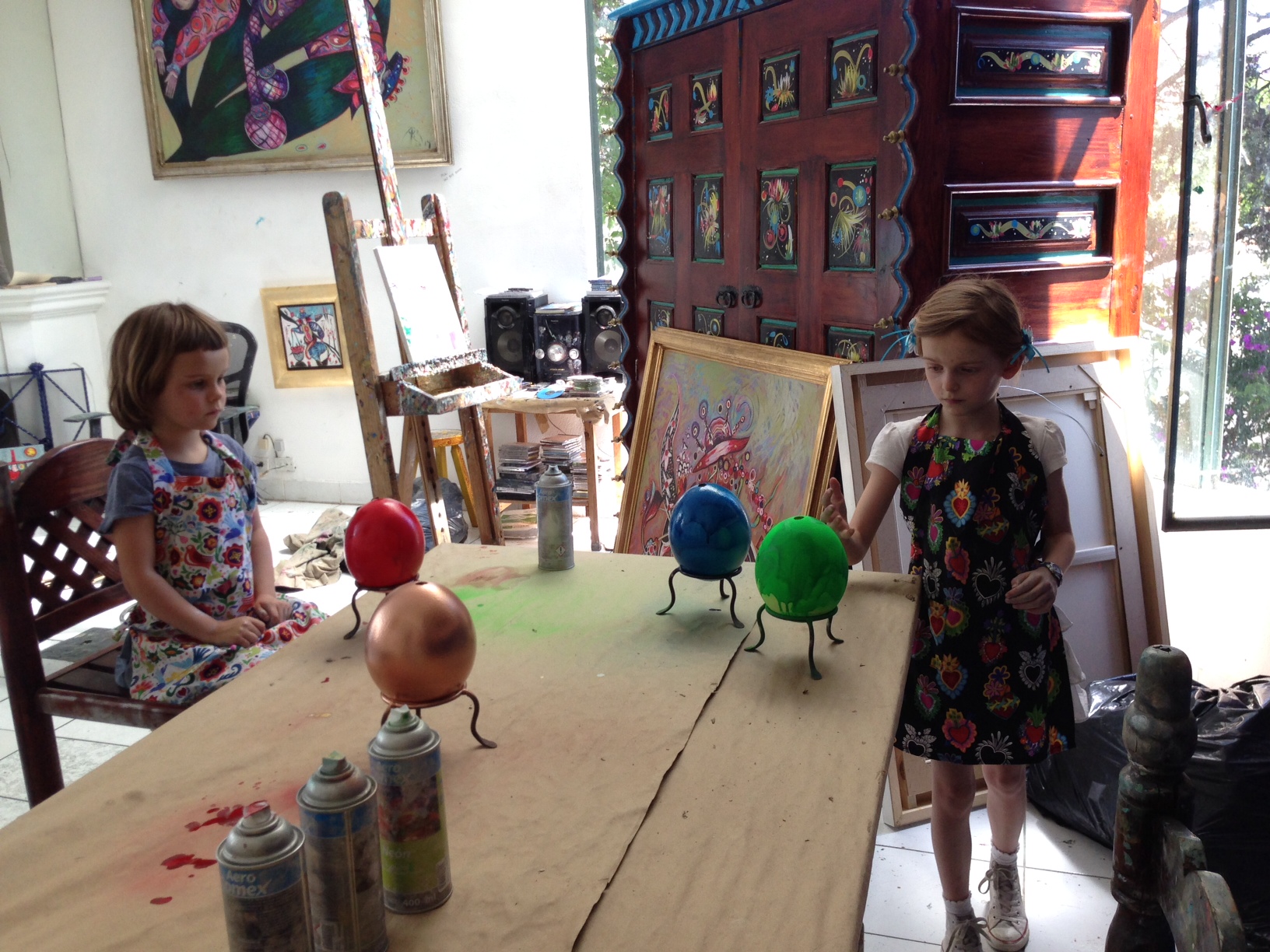


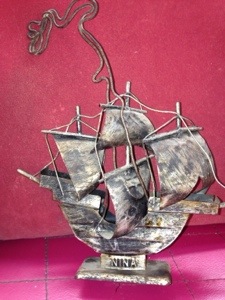
Philomena, you don’t have to worry if you think you’ve made a mistake – the best thing about painting is that you can always paint over them. – Nina Wisniewski (artist and teacher, San Miguel de Allende)


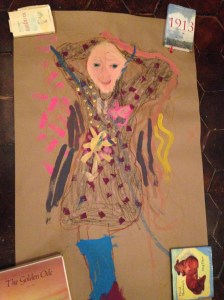
PHILOMENA’S SELFIE
(luna drew her outline, philomena filled it with pure philomena)
Followed the sun back to London
only to get lost in the forests
of China and Japan,
enveloped in the scent of
tatami & hinoki.
https://www.royalacademy.org.uk/exhibition/4



Apparently today a Double Black Moon is meant to appear in the night sky. Note that there is no scientific evidence of this moon-event but I have become obsessed with all things mystical around the moon given that my daughter’s name is Luna. The double lunation occurs every two and a half to three years and is associated with higher consciousness, hidden wisdom, the deepening of communication with the angelic, fairy and spiritual realms.
Some believe the wishes you make on a double black moon come true. So I’ve been thinking long and hard about what I wish today. And what I wish–above all else–is to be the best mother possible to my gorgeous daughters. To love them, cherish them, to deepen my communication with them, to reach a higher consciousness with them and to live together with them in all things magical.
I dedicate this short film to Philomena and Luna. My greatest loves. I love you all the way to the moon–across the moon and back.
Moonwalk – http://aeon.co/film/moonwalk-a-short-film-about-the-ultimate-moon-shot/
all of these artists will all be performing here: http://howthelightgetsin.iai.tv/
Mr. Scruff also sells tea. Proceeds go to charity. Check it out. http://www.makeusabrew.com/showscreen.php?site_id=20&screentype=site&screenid=20
The poem from which the line comes exhorts Roman citizens to develop martial prowess such that the enemies of Rome will be too terrified to resist them. In John Conington‘s translation, the relevant passage reads:
To suffer hardness with good cheer,
In sternest school of warfare bred,
Our youth should learn; let steed and spear
Make him one day the Parthian’s dread;
Cold skies, keen perils, brace his life.
Methinks I see from rampired town
Some battling tyrant’s matron wife,
Some maiden, look in terror down,—
“Ah, my dear lord, untrain’d in war!
O tempt not the infuriate mood
Of that fell lion I see! from far
He plunges through a tide of blood!”
What joy, for fatherland to die!
Death’s darts e’en flying feet o’ertake,
Nor spare a recreant chivalry,
A back that cowers, or loins that quake.
(thank you wikipedia for always being there for me when i need you)
Afro-Beat Collective, explores the need and importance of exploring for the sake of exploring…”The objective is to to create music derived from a deliberate intention to transmit a message of determination, substance and, most importantly, Unity. To see music as One World, a musical space that transcends and breaks free from styles and any kind of sound that compromises the skills of the musicians playing and the importance of musicianship or group collaboration and expression.” – HENRY COLE & AFROBEAT COLLECTIVE

Something has happened to the tooth fairy. Perhaps you can help.
She was meant to come last night, after the dramatic departure of Tooth No.4, but she never showed up.
We think she may have lost her way.
Either that, or maybe her wing got caught in a thorn bush somewhere?
She might have crashed into our window and fainted–although given how dirty our windows are, Philomena thinks this is highly unlikely.
Depending on where the tooth-fairy was coming from, she might have been delayed by a snow storm (while snow-fairies have wings that work despite freezing temperatures, tooth-fairies do not).
It all really depends on where she was coming from. It might have simply been too long a journey for her and she will make it by tonight.
The fairy who came to collect Philomena’s Tooth No. 3 (a few days ago) flew all the way from Guatemala leaving 50 Quetzales under her pillow. A few months earlier a fairy took Tooth No.2 away leaving behind a “five-Yen” coin (in Japan it’s common to insert a five-yen coin into a new wallet before inserting any other money). The first fairy to ever visit us came from Mozambique — she gave Philomena 100 Meticais.
If the tooth-fairy did make it to our house there is a chance that she became confused about which tooth-box to look in. Last night (after giving it a great deal of thought), Philomena decided to use a new tooth-box. She used the old tooth-box to prop open the window to her bedroom. It’s quite possible that the fairy thought her tooth was inside the old box in the window sill but wouldn’t have had the strength to lift the window and pull the box out to check. We suspect she is highly annoyed if she came all this way and was unable to collect the tooth she was looking for.
In any case, we are currently drafting a letter to the tooth-fairy community to understand a bit better what may have happened last night. If you have any experience with this or thoughts about the fairy’s whereabouts please do let me know.
Thanks. xx
When I was pregnant I vowed never to show my children certain films or read them certain fables—Snow White, Cinderella and Sleeping Beauty were at the top of that list. This was simply because I never wanted them to overly romanticise love, marriage, or consider waiting “forever” for some prince to come rescue them. I also was extremely uncomfortable with the fact that all of these tales featured dead mothers and wicked step-mothers (I have recently learned that the second part of the non-Disneyfied version of Sleeping Beauty actually features a cannibalistic mother-in-law who attempts to eat all of Sleeping Beauty’s children—as if she hadn’t suffered enough from her 100 year coma!)
Still, by the time Philomena had turned 4, she had the three book versions of the stories above and had seen Sleeping Beauty a dozen times over (actually, I am embarrassed to confess just how many times she’s seen the film). So while I didn’t appreciate the lesson being taught by the fable, i.e. that with patience and through passivity, every woman’s prince would come to her rescue and marry her, or that a woman is somehow incomplete without a man, or that a woman should not dare to be curious (curiosity, represented by the spindle in which S.B. pricks her finger, led to her terrible fate), I still exposed her to it in all its glory. Upon lots of pleading, I even bought her a Sleeping Beauty dress and matching crown.
Anyway, as you might suspect, P has taken to love this story so much that we re-enact it regularly at home.
One day, P was so set on the idea that her father would play the role of “prince,” despite the fact that he had not yet come home from the office, that she lay herself down on the floor of our kitchen for 30 minutes (I kid you not!) and patiently waited until her father came home to waken her with a magic kiss. Dressed in her Sleeping Beauty gown, a pillow under her head and hands folded over her belly, she perched her lips and just waited and waited and waited for what probably felt like 100 years to her little 4 year-old self.
I tried everything to convince her to get up off the floor (it was late, we needed to eat, have a bath and get to sleep) but she refused to EVER get up until the prince arrived. I was, of course, incredibly relieved when he finally walked through the door.
And even more overjoyed that he knew to kiss her immediately. With a gleaming smile from ear to ear, Philomena stretched out her arms to greet him and quickly pronounced them “married.” Moments later, she led her prince down the make-believe grand staircase of her castle to dance the waltz, which she hummed as loudly as possible. I, in the role of her mother, the Queen, was commanded to cry with happiness while watching them dance.
It was just about the sweetest thing in the world to observe my 4-year old wait so patiently to be kissed, held and danced with by her father-prince. But I was also unsettled by the fact that we were all celebrating the fact that my child was being influenced by 16th century values, passed down in story form by peasants around a campfire 4 centuries ago, knowing full well that these violent stories were embraced at a time when society was extremely sexually-repressed and dominated by religious conflict.
A while back I read ‘The Uses of Enchantment’ by Bruno Bettelheim to get a better understanding of the value of such fairy tales–it was actually the reading of this book that made me lighten up a bit about exposing my children to all these old methods of story telling. Bettelheim won the US Critic’s Choice Prize (1976) and the National Book Award for Contemporary Thought (1977) for his analysis and support of these fairy tales, which he believed ultimately helped children to deal with their own inner darkness, fear of abandonment and sense of purpose–his logic was framed in terms of Freudian psychology. All in all, what I took away most from Bettelheim’s book was his message that a parent should not to alter or offer explanations of the plot or characters of the fables. He believed that children would come away after each reading of the fable with a deeper understanding of them; to soften or alter the stories could potentially cause more confusion and harm to the child.
Charles Perrault, who first published ‘The Sleeping Beauty in the Wood’ in 1697, made some changes to the century old fable to appeal to the aristocracy of Louis XIV by making the characters more opulent, but he made sure to leave the original fable to speak for itself. Well I read Perrault’s story today and was amazed to discover that I had been completely wrong about my understanding of the story. It was actually good old Walt Disney, who altered the fable in the 50s, pumping some 6 million dollars into its adaptation, which was VERY different from the original story, as an attempt to expel his own Christian narrative and patriarchal values.
How ironic is it that I find the original fable easier to embrace than the one updated in the 1950s—the version embraced by my parents generation?! How ironic is it that those 16th Century peasants weren’t nearly as sexually repressed as Disney?!
Perrault’s original text actually tells a story of a prince, who waited 100 years for the love of a princess. It tells of an extremely devoted and emotional man who was “more at a loss than she.” It tells a story of a marriage sealed in secret, unbeknownst to the King and Queen, and of sleepless nights of divine love-making. It tells the story of a son afraid of his strong and powerful mother who eventually begins to suspect that he is married and reacts with jealousy and vengeance. Lastly, it tells the story of a humble servant who stands up to the angry Queen to protect the love between the prince, the princess and their children.
This is much more my kind of story.
See for yourself below:
“At last he came into a chamber all gilded with gold, where he saw upon a bed, the curtains of which were all open, the finest sight was ever beheld — a princess, who appeared to be about fifteen or sixteen years of age, and whose bright and, in a manner, resplendent beauty, had somewhat in it divine. He approached with trembling and admiration, and fell down before her upon his knees. And now, as the enchantment was at an end, the princess awaked, and looking on him with eyes more tender than the first view might seem to admit of. “Is it you, my prince?” said she to him. “You have waited a long while.” The prince, charmed with these words, and much more with the manner in which they were spoken, knew not how to show his joy and gratitude; he assured her that he loved her better than he did himself; their discourse was not well connected, they did weep more than talk, little eloquence, a great deal of love. He was more at a loss than she.”
…after supper, without losing any time, the lord almoner married them in the chapel of the castle, and the chief lady of honor drew the curtains. They had but very little sleep.
…the prince left her next morning to return to the city, where his father must needs have been in pain for him. The prince told him that he lost his way in the forest as he was hunting.
The king, his father, who was a good man, believed him; but his mother could not be persuaded it was true; and she began to suspect that he was married…
The queen spoke several times to her son, to inform herself after what manner he did pass his time, and that in this he ought in duty to satisfy her. But he never dared to trust her with his secret; he feared her, though he loved her, for she was of the race of the ogres, and the king would never have married her had it not been for her vast riches; it was even whispered about the court that she had ogreish inclinations, and that, whenever she saw little children passing by, she had all the difficulty in the world to avoid falling upon them. And so the prince would never tell her one word.
But when the king was dead, which happened about two years afterward, and he saw himself lord and master, he openly declared his marriage; and he went in great ceremony to conduct his queen to the palace. They made a magnificent entry into the capital city, she riding between her two children….
for the complete story see: http://www.pitt.edu/~dash/type0410.html#nights
 Girlwithoutawatch